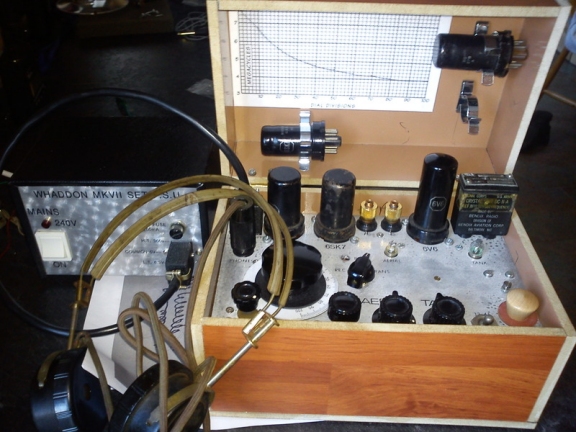
New Parasets built - pictures de G4FBC
We have just heard that Ron won the Bill
Sparks G3DCJ Trophy for the annual constructors competition, Blackpool N.A.R.S.A.
Radio Rally at Norbreck Castle, with his second Paraset. He only completed
construction late last night, and did wonder if the paint would be dry on
the wooden cases in time !!
He also feels congratulations are due,
in NO small measure to the assistance and most of the help and guidance came
from this website......for which he offers many thanks.
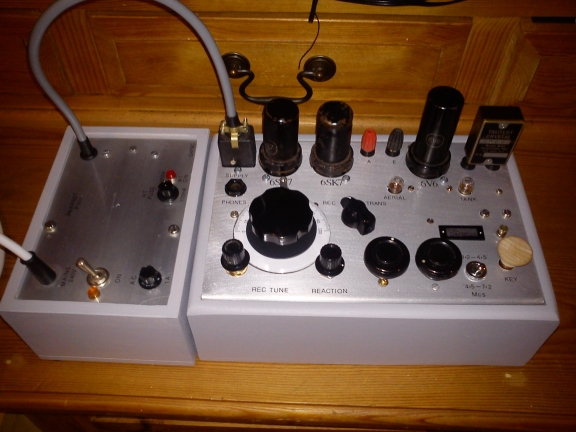
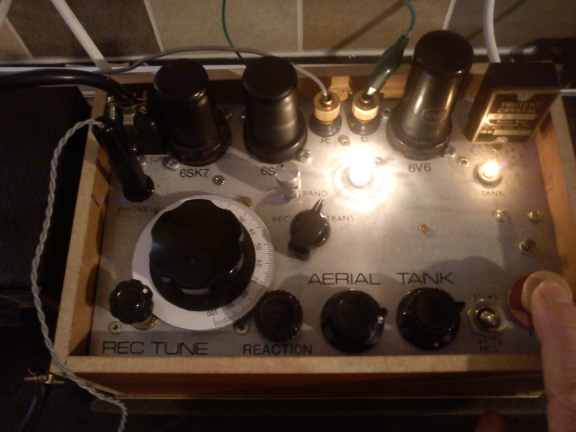
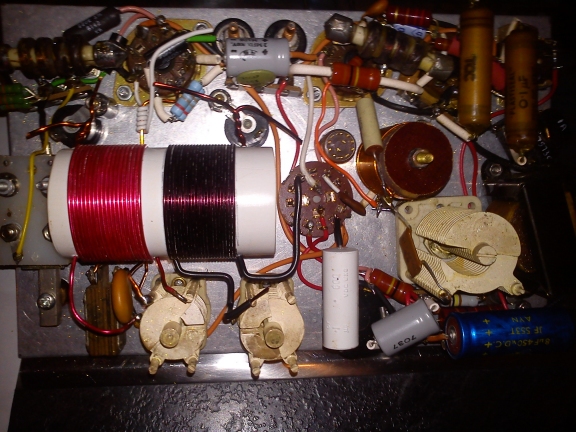
Paraset 2
Just thought you might like to see the
results of my efforts to build my second paraset and a matching new PSU.
This one gives 294v H.T. so maybe my temperamental Rx may behave itself now.
As yet though I haven't put it through its paces, but I'm hopeful that with
a new Rx coil, ( already made but have yet to wire it in), this one will
perform better than Paraset 1. 73 de Ron G4FBC
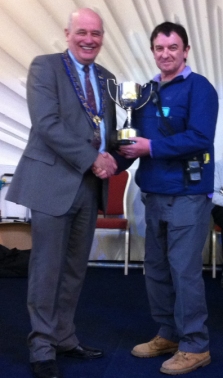
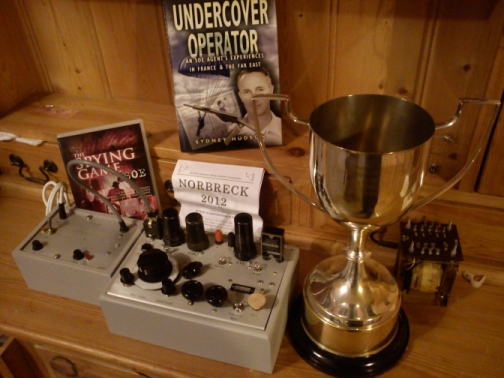
Presentation of construction comp
winner's cup by John Gould G3WKL the RSGB president to Ron and the cup with
the winning project
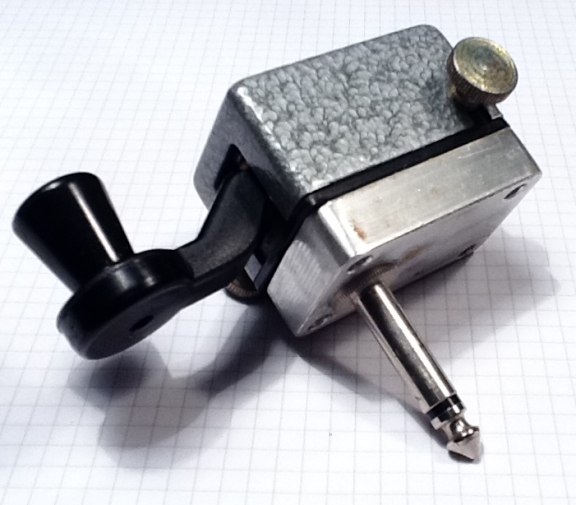
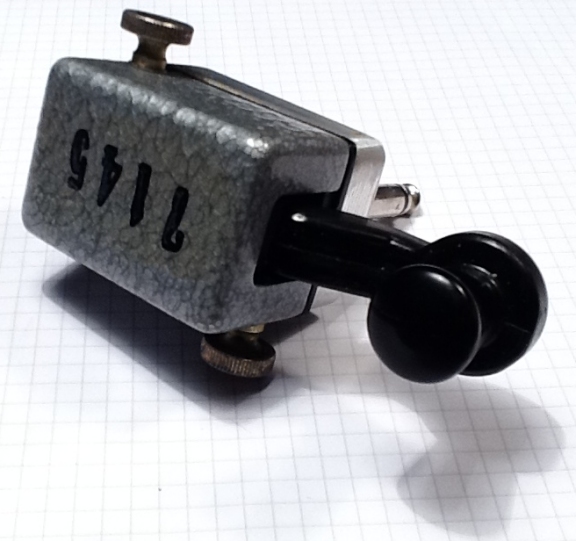 |
| Comment from
G4BFC
Although I have tried to stay with the
original circuit as far as was possible, just to get it going as it
were.
Now I have seen for myself how cramped
the tuning is, its obvious it will need to be fitted with better
bandspreading....more room for experimenting here I think. My version uses
a dial cut out of PCB material, and markings drawn out using AUTOCAD on card
and stuck on. The friction drive uses a rubber grommet that runs on the edge
of the dial. This has proved far from ideal, as the grommets wear out and
split if it is used much over the whole tuning range. I also tried to fabricate
a metal disc type drive, with not much success. Then hit on a rather easier
method of fine tuning....I found that fine tuning was best achieved with
a ten turn pot used for the regen control. As this is advanced past the
oscillation point, this then offers better fine tuning as it 'pulls' the
oscillation frequency, rather than using the friction drive control on the
main dial. This method however knocks the dial calibration chart out of kilter
!........as I say, more experimentation is to be done. My Paraset delivers
a measured 4.45W into a 50 ohms load, ....so all in all, I'm quite pleased
with it so far. Hope you like it too. I have also posted a video of my paraset
at :-
Click here to watch video.
I have already been experimenting with
the T.T. paraset circuits, so may well build a TT version as well........Thanks
for putting up a very interesting website, and hope it continues to develop
more ideas...........vy 73 es tnx de G4FBC, ..Ron in Cumbria
|



